
.png)
5 Factors Doctors Check Before GLP-1 Use
What doctors assess before prescribing GLP-1 medications like Ozempic and Wegovy in Singapore. BMI criteria, medical history, drug interactions, and more.
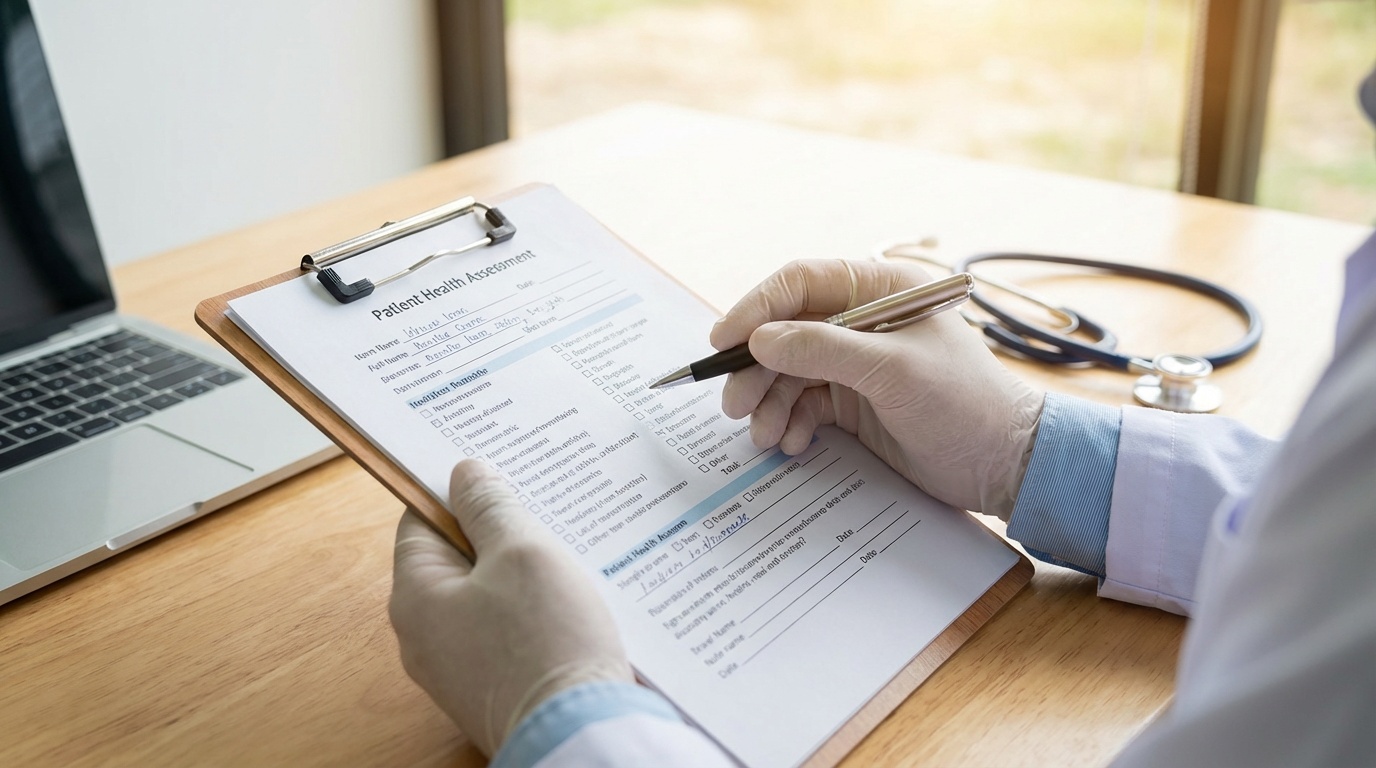
As GLP-1 medications have gained broader recognition for both weight loss and cardiovascular benefits, demand has increased across clinics and telehealth platforms in Singapore. More people are asking about Ozempic, Wegovy, and Mounjaro for weight loss. But these are prescription medications, not supplements, and every responsible doctor runs through a structured medical evaluation before writing that prescription.
Here are the five things your doctor will assess, and why each one matters for your safety and results.
1. BMI and weight-related health conditions
The first question is whether you meet the clinical criteria for GLP-1 treatment. In Singapore, the BMI thresholds are lower than international standards because Asian populations develop metabolic complications at lower body weights.
| Classification | International BMI | Singapore/Asian BMI |
|---|---|---|
| Healthy weight | 18.5-24.9 | 18.5-22.9 |
| Overweight | 25.0-29.9 | 23.0-27.4 |
| Obese | 30.0 and above | 27.5 and above |
For GLP-1 prescribing at Trimly, the criteria are:
- BMI of 27.5 or above, even without other conditions
- BMI of 24 or above, if you have a weight-related health condition (type 2 diabetes, hypertension, high cholesterol, PCOS, sleep apnoea)
Your doctor will calculate your BMI and may also measure waist circumference. For Asian populations, a waist circumference above 90 cm (men) or 80 cm (women) indicates elevated metabolic risk regardless of BMI.
Beyond the numbers, your doctor will also consider how your weight is affecting your daily life and health. Someone with a BMI of 26 who has poorly controlled type 2 diabetes and high blood pressure may benefit more from GLP-1 treatment than someone with a BMI of 28 and no other health issues.
2. Medical history and contraindications
GLP-1 medications are generally safe, but there are specific conditions that make them inappropriate or require extra caution.
Conditions that rule out GLP-1 use
- Personal or family history of medullary thyroid carcinoma (MTC). GLP-1 medications caused thyroid C-cell tumours in rodent studies. This has not been confirmed in humans, but doctors will not prescribe them if you have a personal or family history of MTC.
- Multiple Endocrine Neoplasia syndrome type 2 (MEN2). Same reason as above.
- History of severe pancreatitis. GLP-1 medications may increase the risk of pancreatic inflammation. If you have had pancreatitis before, the risk-benefit calculation changes.
Conditions that require careful monitoring
- Type 1 diabetes (GLP-1 medications are for type 2 diabetes and obesity, not type 1)
- Gastroparesis or severe GI conditions (GLP-1 slows gastric emptying further)
- Diabetic retinopathy (rapid blood sugar improvements can temporarily worsen retinopathy)
- Kidney disease (dose adjustments may be needed, and dehydration from GI side effects can strain the kidneys)
- Active gallbladder disease (rapid weight loss increases gallstone risk)
Your doctor will ask about your full medical history, including conditions you may not think are relevant. Be thorough. Omitting information does not help.
Not sure if GLP-1 treatment is appropriate for your situation? A Trimly doctor can assess your medical history and advise you during a video consultation.
Check your eligibility.
3. Current medications and potential interactions
GLP-1 medications interact with several drug categories. Your doctor needs a complete list of everything you take, including over-the-counter supplements.
Drug interactions to watch for
Insulin and sulfonylureas. These medications lower blood sugar. Combined with a GLP-1 (which also affects blood sugar), the risk of hypoglycaemia increases. Your doctor may reduce your insulin or sulfonylurea dose when starting GLP-1 treatment.
Oral contraceptives. GLP-1 medications slow gastric emptying, which can affect how quickly oral medications are absorbed. If you take the birth control pill, your doctor may recommend using a backup method for the first few months or switching to a non-oral contraceptive.
Blood thinners (warfarin). Slowed gastric emptying can alter warfarin absorption. Your doctor will monitor your INR more closely during the first weeks of GLP-1 treatment.
Oral semaglutide specifically. Rybelsus has stricter interaction considerations because it is absorbed in the stomach. It must be taken on an empty stomach with no more than 120ml of water, and you need to wait 30 minutes before taking other oral medications. This timing requirement affects how other morning medications are scheduled.
Supplements and over-the-counter products
Mention everything: vitamins, herbal supplements, protein powders, traditional medicine. Some supplements interact with blood sugar control or liver function in ways that matter when starting GLP-1 treatment.
4. Lifestyle assessment and readiness
GLP-1 medications work best when combined with lifestyle changes. They are not a substitute for eating better and moving more. They make those changes easier by reducing hunger and improving metabolic function, but the habits still need to be built.
Your doctor will typically ask about:
Diet and eating patterns
- What does your typical day of eating look like?
- Have you tried structured diets before? What happened?
- Are there specific eating patterns (emotional eating, late-night eating, binge eating) that contribute to weight gain?
- Are you willing to increase protein intake and adjust meal sizes?
Physical activity
- How active are you currently?
- Are there barriers to exercise (injury, time, mobility)?
- Are you willing to add resistance training (important for preventing muscle loss on GLP-1)?
Previous weight loss attempts
This is not a test. Doctors ask this to understand what has and has not worked for you. A history of multiple failed diets is not a red flag. It is actually a common reason why GLP-1 medication makes sense, since it addresses the biological barriers (hunger, metabolic adaptation) that lifestyle changes alone could not overcome.
Mental health
Your doctor may ask about your relationship with food, body image, and mental health history. GLP-1 medications are not recommended for people with active eating disorders (anorexia or bulimia). If you have depression or anxiety, your doctor will monitor for any mood changes during treatment, as these have been reported in a small number of users.
For more on what to expect from a consultation, see how Trimly's consultations work.
5. Pregnancy and family planning
GLP-1 medications are not safe during pregnancy or breastfeeding. This is a firm contraindication, not a relative one.
If you are planning to become pregnant, you must stop GLP-1 medication at least two months before trying to conceive. For tirzepatide (Mounjaro), the recommended washout period is longer. Your doctor will discuss the timeline based on which medication you are using.
There is a secondary consideration worth knowing: GLP-1 medications can increase fertility. Weight loss improves ovulation in women with PCOS and other hormonal conditions. Several patients have become pregnant unexpectedly after starting GLP-1 treatment because their cycles became more regular. If you are not planning a pregnancy, make sure your contraception is reliable. And keep in mind that GLP-1 can affect oral contraceptive absorption, as mentioned above.
For women with PCOS-related weight issues, GLP-1 treatment can be a useful bridge. Lose weight, improve hormonal function, stop the medication, then attempt conception. But this needs to be planned with your doctor. See our article on PCOS weight loss options.
What happens after the assessment
If your doctor determines that GLP-1 treatment is appropriate, the next steps are:
-
Choosing a medication. Your doctor will recommend either oral semaglutide (Rybelsus), injectable semaglutide (Ozempic or Wegovy), or tirzepatide (Mounjaro) based on your health profile, preferences, and goals. See our oral vs injectable GLP-1 comparison.
-
Baseline blood tests. Most doctors will order blood work before starting treatment: fasting glucose, HbA1c, lipid panel, liver function, kidney function (creatinine/eGFR), and thyroid function. These provide a baseline for monitoring progress and safety.
-
Starting at the lowest dose. All GLP-1 medications follow a titration schedule, starting with a low dose and increasing gradually over weeks. This minimises side effects and lets your body adjust. Semaglutide starts at 0.25mg weekly and increases to a maintenance dose of 2.4mg over about 16-20 weeks.
-
Scheduling follow-ups. Regular check-ins allow your doctor to adjust dosing, manage side effects, and track progress. At Trimly, follow-ups are unlimited and included in your treatment plan.
Getting assessed at Trimly
Trimly is an MOH-licensed telehealth clinic in Singapore. The assessment process happens over a video consultation. Your doctor reviews all five factors above, discusses your goals, and creates a treatment plan if GLP-1 medication is appropriate.
Treatment plans range from $350 to $650 per month, covering the consultation, medication, home delivery, and unlimited follow-ups. If the assessment determines that GLP-1 is not right for you, your doctor will explain why and discuss alternatives.
Find out if you are eligible for GLP-1 treatment
Book ConsultationFrequently asked questions
Can I get Ozempic without a doctor's assessment?
No. Ozempic and all GLP-1 medications are prescription-only in Singapore. A doctor must evaluate your medical history, current medications, and health status before prescribing. This applies to both in-person clinics and telehealth services like Trimly. Buying GLP-1 medications without a prescription is illegal and unsafe.
What BMI do I need for GLP-1 treatment in Singapore?
At Trimly, you need a BMI of 27.5 or above, or a BMI of 24 or above with a weight-related condition (type 2 diabetes, hypertension, high cholesterol, PCOS, or sleep apnoea). Singapore uses lower BMI thresholds than international standards because Asian populations face higher metabolic risks at lower body weights.
How long does the doctor assessment take?
A typical video consultation at Trimly takes 15-30 minutes. Your doctor will review your medical history, current medications, lifestyle, and weight loss goals. If GLP-1 is appropriate, you can start treatment the same day with medication delivered to your home.
Can I take GLP-1 medication if I have diabetes?
GLP-1 medications were originally developed for type 2 diabetes, so yes. However, your doctor will review your current diabetes medications to avoid drug interactions (particularly with insulin or sulfonylureas) and adjust doses as needed. GLP-1 is not suitable for type 1 diabetes.
Key takeaways
Before prescribing GLP-1 medication, doctors check five things: your BMI and weight-related health conditions, medical history and contraindications, current medications and interactions, lifestyle readiness, and pregnancy status. These checks are not obstacles. They ensure the medication is safe for you and likely to work. If you are considering GLP-1 treatment, the first step is a medical consultation where your doctor can run through this assessment and create a personalised plan.

MOH-approved clinic specialised in obesity and weight management
HCSA License:
R/25M0505/MDS/001/252
R/25M0505/MDS/001/252
*Any person who needs any essential life-saving measure should not seek to receive such measure by Astro Health (Trimly)’s teleconsultation services.
Astro Health (Trimly) is owned and operated by Amped Lab Pte Ltd. It is a licensed outpatient medical services provider under the Singapore Healthcare Services Act.
