
.png)
How GLP-1 Consultations Adapt to Your Needs
GLP-1 consultations are personalised to your body, goals, and lifestyle. Learn what happens at each step and how treatment adapts over time.

Most people assume a GLP-1 consultation is a standard, formulaic appointment. You walk in, a doctor checks your BMI, and you walk out with the same prescription as everyone else. That is how most weight loss programmes work. But it is not what happens in a well-run GLP-1 consultation.
Two patients with the same BMI can end up on completely different treatments. One might take an oral tablet because she travels frequently and prefers not to carry injection pens. Another might choose a weekly injectable because she finds daily dosing hard to stick with during hectic mornings. Their starting doses differ. Their follow-up schedules differ. The dietary advice they get reflects different cultural preferences and work patterns. A personalised weight loss treatment plan accounts for all of these variables, not just a number on a scale.
Clinical trials back this up. In the STEP 1 trial, semaglutide delivered an average 14.9% weight loss over 68 weeks (Wilding et al., NEJM 2021), but individual results varied widely depending on adherence, dosing, and lifestyle factors. A good GLP-1 doctor consultation is about setting you up to land at the better end of that range.
This article walks through what happens at each stage of a GLP-1 consultation, from the first appointment through ongoing follow-ups, so you know exactly what to expect.
Your first consultation: what actually happens
If you have never had a weight loss consultation in Singapore before, a video call with a doctor can feel a bit abstract. Here is what the appointment actually looks like.
Your doctor starts by asking about your weight history. This is not a quick BMI check. They want to know what you have tried before, what worked for a while, and what did not stick. If you have been through cycles of calorie restriction, keto, or intermittent fasting and regained the weight each time, that context matters. It tells the doctor your body's appetite regulation system is likely working against you, which is the specific problem GLP-1 medications address.
Next, they review your medical history: conditions like type 2 diabetes, hypertension, PCOS, sleep apnoea, or fatty liver disease. In Singapore, Asian-specific BMI thresholds apply. Overweight starts at BMI 23, and obesity at BMI 27.5. At Trimly, you may be eligible with a BMI of 24 or above if you have weight-related conditions, or BMI 27.5 and above without them. Your doctor also screens for contraindications, including a personal or family history of medullary thyroid carcinoma or Multiple Endocrine Neoplasia type 2, which rule out GLP-1 treatment entirely. For more on these checks, see our guide on factors doctors check before prescribing GLP-1.
The doctor also asks about your current medications. GLP-1 drugs can interact with insulin and sulfonylureas, increasing the risk of low blood sugar. If you are on blood pressure medication or antidepressants, those are factored in too. Pregnancy, breastfeeding, or plans to conceive in the near future mean GLP-1 treatment is not suitable right now.
By the end of this first consultation, your doctor has a clear picture of your body, your health, and your day-to-day reality. Nothing about this process is generic.
How doctors match treatment to your body
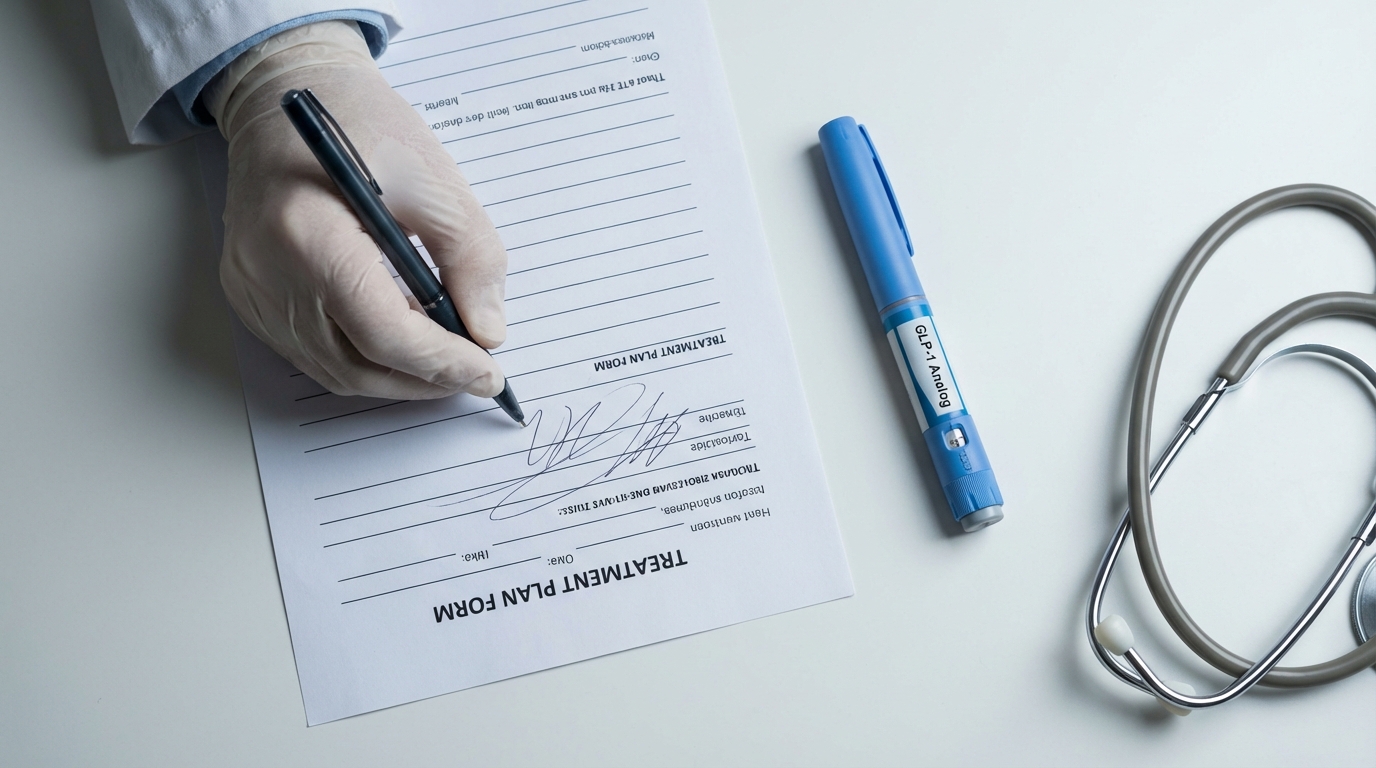
Once your doctor understands your medical profile, they choose the right medication and the right dose. This is where your GLP-1 consultation gets specific.
If weight loss is your primary goal and you have no diabetes, your doctor will likely recommend semaglutide (the active ingredient in Wegovy) or tirzepatide. Both have strong trial data. The STEP 1 trial showed semaglutide producing 14.9% average weight loss at 68 weeks. SURMOUNT-1 showed 20.9% weight loss with tirzepatide 15 mg at 72 weeks on an intention-to-treat basis (Jastreboff et al., NEJM 2022). Your doctor weighs these results against your specific situation.
If you also have type 2 diabetes, the medication choice accounts for blood sugar control alongside weight. If you have cardiovascular risk factors, that tilts the decision further.
Dosing is never rushed. Semaglutide starts at 0.25 mg weekly and titrates up to the maintenance dose of 2.4 mg over 16 weeks. Each step up happens only if you are tolerating the current dose well. If you have persistent nausea or other side effects at a particular level, your doctor may hold the dose for an extra few weeks rather than pushing through. Slower titration means less discomfort and better long-term adherence.
Your body composition also influences the plan. A patient with a BMI of 32 and PCOS has different metabolic considerations than someone with a BMI of 28 and no other conditions. The doctor takes all of it into account. The goal is not to follow a protocol; it is to find what works for your body.
Wondering if GLP-1 treatment suits your situation?
Check your eligibility in 2 minutes.
Choosing between oral and injectable
One of the first practical decisions in your GLP-1 consultation is whether oral or injectable treatment fits your routine better. Your doctor walks through the pros and cons of each, but the final choice is yours.
Oral GLP-1 (Rybelsus) is a daily tablet. Dosing starts at 3 mg, increases to 7 mg after a month, and then to 14 mg. You take it on an empty stomach with a small amount of water, at least 30 minutes before eating or drinking anything else. For some people, this slots easily into their morning. For others, especially those with unpredictable schedules or early breakfast habits, it feels like an extra burden.
Injectable GLP-1 (Wegovy) is a once-weekly injection using a pre-filled pen. Many patients find the weekly rhythm easier to maintain than a daily tablet. The pen uses a fine needle, and most people describe the injection as painless after the first time. If injections make you uneasy, that is completely valid, and your doctor will talk through it honestly.
The clinical data also differs. Current Rybelsus at 14 mg produces more modest weight loss (roughly 3-5%) compared to injectable semaglutide at full dose. Higher-dose oral formulations are in development, but the options available today favour injectables for weight loss outcomes. Your doctor explains these differences so you can make an informed decision.
For a full comparison of both formats, our article on oral vs injectable GLP-1 pros and cons goes into detail. At Trimly, both options are available, and you can switch between them if your preference changes over time.
Fitting treatment around your lifestyle

A weight loss consultation in Singapore should account for how you actually live. This is where telehealth helps.
With a telehealth weight loss consultation, you do not need to take time off work or sit in a clinic waiting room. You join a video call from your living room, your office during lunch, or a quiet corner while the kids nap. Your medication is delivered to your door. No pharmacy queue.
But lifestyle adaptation goes deeper than convenience. Your doctor asks about your daily routine, your eating patterns, and what tends to trip you up. If you eat out frequently (as many people in Singapore do), the conversation covers how to make better choices at hawker centres and food courts without giving up the foods you enjoy. Chicken rice, nasi lemak, ban mian: none of these are off-limits. GLP-1 medications reduce appetite and the mental "food noise" that drives overeating, so portion control starts to feel natural.
If you travel regularly for work, your doctor covers the logistics. GLP-1 injection pens can be carried in a small cool bag. If you miss a weekly dose, you can take it within five days of the scheduled day; otherwise, skip that dose and resume the following week. Knowing exactly what to do in these situations takes the stress out of travel weeks.
Your exercise habits come into the picture too. The general recommendation is 150 minutes of moderate activity per week, with resistance training twice weekly. This matters because rapid weight loss can involve some muscle loss alongside fat loss. Your doctor might suggest increasing protein intake (roughly 1.2-1.6 g per kg of body weight daily) to help preserve lean muscle mass.
Treatment adapts to your life. Not the other way around.
How follow-ups keep your plan on track
The first consultation sets the direction, but follow-ups are where your treatment plan actually changes and improves. At Trimly, follow-ups are unlimited and free, because regular check-ins are not optional with GLP-1 treatment.
In the early weeks, follow-ups focus on tolerability. Your doctor checks how you are responding to the starting dose and whether side effects like nausea, constipation, or bloating have appeared. Most side effects are mild and temporary, peaking during the first month or after dose increases. If they bother you, your doctor can slow the titration, adjust meal timing advice, or suggest supportive measures. For more on managing these, see our article on common GLP-1 side effects and how to manage them.
As treatment progresses, follow-ups shift to tracking results. Your doctor monitors weight but also looks at broader markers: waist circumference, blood pressure, energy levels, sleep quality, and how you feel day to day. If you are losing weight steadily and feeling good, the plan continues. If progress stalls, your doctor investigates. It could be a dosing issue, a sleep or stress problem affecting your hormones, or eating habits that need a small tweak.
Dose changes happen gradually and always based on your individual response. Your doctor will not increase your dose on a rigid schedule if your body is not ready. When you reach your target weight, the conversation shifts to maintenance. Some patients stay on a lower maintenance dose. Others taper off with close monitoring. Your doctor guides this transition based on your metabolic response and lifestyle habits, not a one-size-fits-all timeline.
At Trimly, you can also reach your care team via WhatsApp between appointments. If something comes up, like a new side effect, a question about a missed dose, or uncertainty about whether your progress is normal, you get a response. You do not have to wait for your next scheduled appointment.
Ready to see how a consultation works?
Book your consultation with Trimly.
Frequently asked questions
What happens during a first GLP-1 consultation?
Your doctor reviews your weight history, medical conditions, current medications, and lifestyle. They check your BMI using Asian-specific thresholds (overweight at 23, obese at 27.5 in Singapore) and screen for contraindications. Based on all of this, they recommend a treatment approach that fits your body and goals. The appointment typically takes 15-20 minutes via video call.
How long before I see results from GLP-1 treatment?
Most patients notice reduced appetite and fewer cravings within the first two to four weeks. Visible weight loss typically shows after four to eight weeks. In clinical trials, semaglutide produced an average 14.9% body weight loss over 68 weeks (STEP 1), while tirzepatide at the highest dose achieved 20.9% over 72 weeks (SURMOUNT-1). Your results will depend on your starting point, medication, dosing, and lifestyle changes.
Can I switch between oral and injectable GLP-1?
Yes. If you start with oral GLP-1 and find the daily fasting requirement difficult, or if you want stronger weight loss results, your doctor can switch you to an injectable option. The reverse works too. Follow-up consultations reassess what is working and adjust from there.
How much does GLP-1 treatment cost in Singapore?
At Trimly, treatment costs between $350 and $650 per month, depending on the medication and dose. This includes your doctor consultations, medication, home delivery, and unlimited free follow-ups. There are no hidden fees for additional appointments. Trimly is MOH-licensed under HCSA licence R/25M0505/MDS/001/252.
Your next step
A GLP-1 consultation is not a one-size-fits-all appointment. From the first video call through every follow-up, your treatment adapts to your body, your health, and how you actually live. The medication is matched to your goals. The dosing is adjusted to your tolerance. The practical advice reflects your real routine, not an ideal one.
If you have been putting off getting help because you assumed it would be another generic programme, this is different. GLP-1 treatment works with your biology, and a good consultation makes sure the plan fits your life too.
Trimly offers personalised GLP-1 treatment from $350/month with MOH-licensed doctors, medication delivered to your door, and unlimited free follow-ups. If you want to find out whether GLP-1 is right for you, our complete checklist for starting GLP-1 treatment covers everything you need to prepare.
Ready to find out if GLP-1 treatment is right for you?
Book Consultation

MOH-approved clinic specialised in obesity and weight management
HCSA License:
R/25M0505/MDS/001/252
R/25M0505/MDS/001/252
*Any person who needs any essential life-saving measure should not seek to receive such measure by Astro Health (Trimly)’s teleconsultation services.
Astro Health (Trimly) is owned and operated by Amped Lab Pte Ltd. It is a licensed outpatient medical services provider under the Singapore Healthcare Services Act.
