
.png)
Orforglipron: The GLP-1 Weight Loss Pill With No Fasting Requirement
Orforglipron is an oral GLP-1 pill that works without fasting or food restrictions. Learn how it compares to Rybelsus, clinical results, and FDA timeline.
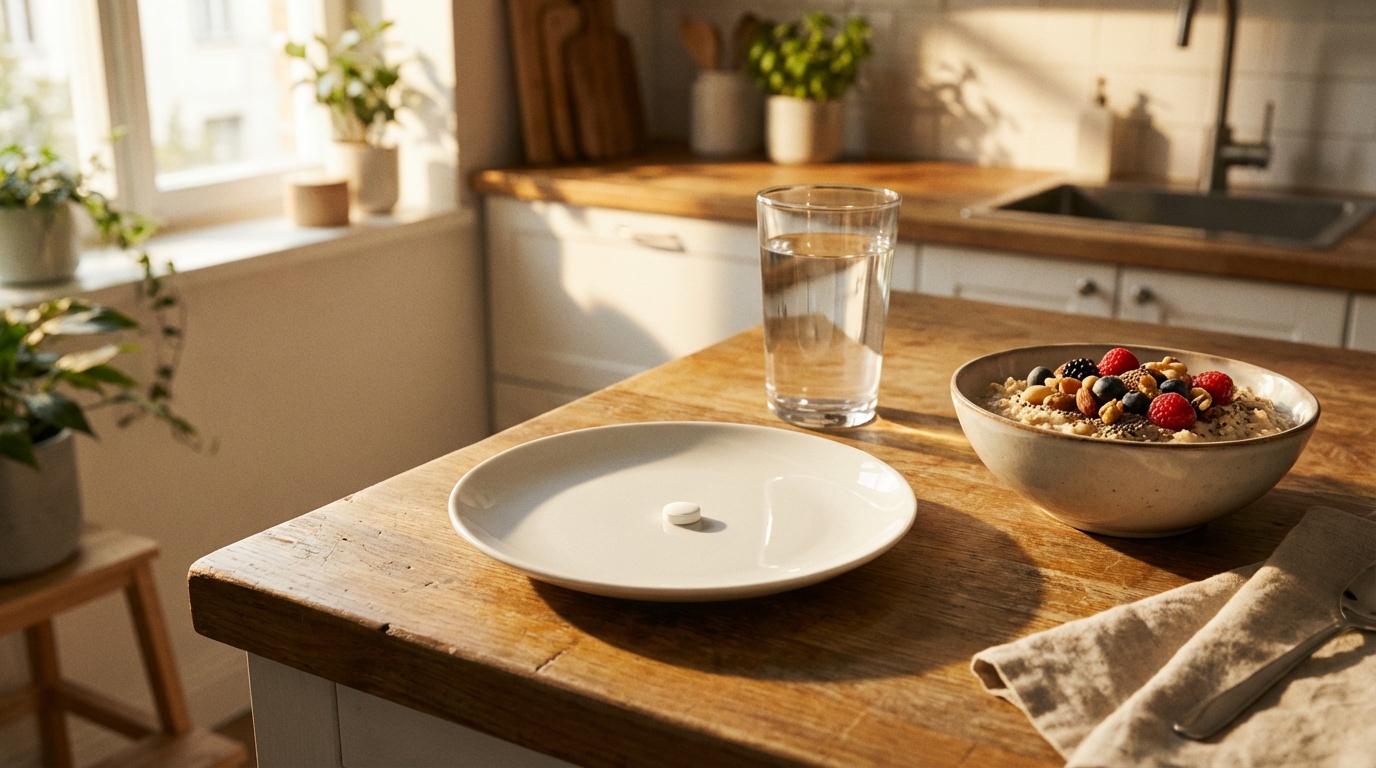
The FDA is expected to make a decision on orforglipron by April 2026, and it could change how oral GLP-1 treatment works for millions of people. Unlike current oral options, this new weight loss pill does not require fasting, has no water restrictions, and does not need a 30-minute wait before eating.
If you have taken Rybelsus for weight loss, you know the routine: wake up, take the pill on an empty stomach with no more than 120 mL of water, then wait half an hour before eating or drinking anything. It works, but the dosing requirements are a real barrier. Many patients find them hard to maintain day after day.
Orforglipron is a completely different type of molecule that sidesteps those restrictions. In phase 3 trials, it delivered 73.6% more weight loss than Rybelsus, with a dosing experience as simple as taking a regular vitamin.
What is orforglipron and why is it different?
Orforglipron is an oral GLP-1 receptor agonist made by Eli Lilly. It works by activating the same GLP-1 receptors targeted by semaglutide and liraglutide, reducing appetite, slowing gastric emptying, and helping your body regulate blood sugar. But the way it does this is fundamentally different from any oral GLP-1 medication currently available.
It is a small molecule, not a peptide. Rybelsus (oral semaglutide) is a peptide, which means it is a chain of amino acids that stomach acid would normally destroy. To get around this, Rybelsus uses an absorption enhancer called SNAC that temporarily raises the pH in your stomach, allowing a small fraction of the drug to survive and enter your bloodstream. The catch: only about 1% of the semaglutide you swallow actually makes it into your system. That is why Rybelsus needs such strict fasting rules. Any food, extra water, or other medications in your stomach interfere with that fragile absorption process.
Orforglipron takes a different approach entirely. As a non-peptide small molecule, it is chemically stable in stomach acid and does not need an absorption enhancer. Its oral bioavailability is approximately 79%, compared to about 1% for Rybelsus. That 79-fold difference in absorption is why orforglipron does not require fasting, has no water restrictions, and does not need a waiting period before meals.
What this means in practice:
- Take it once daily, with or without food
- No restrictions on how much water you drink
- No 30-minute gap before eating, drinking, or taking other medications
- No need to set an alarm before breakfast
For patients who have struggled with the strict Rybelsus routine, or for those who have avoided oral GLP-1 treatment altogether because of the fasting requirement, this makes a real difference in how the medication fits into daily life.
How orforglipron compares to Rybelsus

We do not have to guess how orforglipron stacks up against Rybelsus. The ACHIEVE-3 trial tested them head-to-head in patients with type 2 diabetes, and the results were clear.
Orforglipron 36 mg produced 9.2% weight loss compared to 5.3% with Rybelsus 14 mg over the treatment period. That is 73.6% greater weight loss with orforglipron. HbA1c reduction was also superior: -2.2% with orforglipron versus -1.4% with Rybelsus. All results reached statistical significance (p<0.001).
Beyond the clinical numbers, the practical differences in dosing are substantial:
| Factor | Orforglipron | Rybelsus |
|---|---|---|
| Drug type | Non-peptide small molecule | Peptide + SNAC enhancer |
| Oral bioavailability | ~79% | ~1% |
| Fasting required | No | Yes, empty stomach |
| Water restriction | No | Max 120 mL |
| Wait before eating | None | 30 minutes |
| Weight loss (T2D, head-to-head) | -9.2% | -5.3% |
| HbA1c reduction (head-to-head) | -2.2% | -1.4% |
That bioavailability gap matters day to day. When only 1% of your medication is absorbed, everything in your stomach counts. A sip of coffee, a splash of water over 120 mL, food residue from a late-night snack: any of these can further reduce how much Rybelsus your body actually uses. With 79% bioavailability, orforglipron is far less sensitive to what else is in your stomach.
This does not mean Rybelsus is a poor medication. It has helped many patients lose weight and improve their metabolic health. But its strict dosing requirements are a genuine obstacle for long-term adherence, and orforglipron addresses that directly.
Clinical trial results for weight loss
Orforglipron has been studied in a large phase 3 programme called ATTAIN, with trials covering different patient populations. Here is what the data shows.
ATTAIN-1: obesity without diabetes
This was the flagship weight loss trial, published in the New England Journal of Medicine in 2025. It enrolled 3,127 adults with obesity or overweight (without type 2 diabetes) and followed them for 72 weeks.
At the highest dose (36 mg), participants on orforglipron lost an average of 12.4% of their body weight using the efficacy estimand (which accounts for those who completed treatment). The intention-to-treat analysis, which includes everyone randomised regardless of whether they finished, showed 11.2% weight loss.
The response rates show what individual patients experienced:
- 77.1% lost at least 5% of their body weight
- 59.6% lost at least 10%
- 39.6% lost at least 15%
For an oral medication, that level of weight loss is unusual. For context, injectable semaglutide (Wegovy) typically produces 15-17% weight loss in similar trial populations, while injectable tirzepatide (Zepbound) achieves 18-22%. Orforglipron does not match the injectables on raw weight loss, but it is a pill you take with breakfast rather than a weekly injection.
The cardiometabolic improvements matter too: waist circumference dropped by 11.1 cm, systolic blood pressure fell by 6.7 mmHg, and triglycerides decreased by 21.6%. Among participants who entered the trial with prediabetes, 91% achieved near-normal blood sugar levels by the end of the study.
ATTAIN-2: obesity with type 2 diabetes
This trial, published in The Lancet in 2025, enrolled over 1,600 adults with both obesity and type 2 diabetes, a population where weight loss is typically harder to achieve.
At the 36 mg dose, participants lost an average of 10.5% of their body weight over 72 weeks, with an HbA1c reduction of 1.8%. Double-digit weight loss in patients with type 2 diabetes is harder to achieve because insulin resistance and diabetes medications can both work against fat loss.
ATTAIN-MAINTAIN: switching from injectables to an oral pill
One of the most practical questions patients ask is: "Could I switch from my injection to a pill?" The ATTAIN-MAINTAIN trial studied exactly this. It enrolled 376 adults who were already on injectable Wegovy or Zepbound and switched them to oral orforglipron for 52 weeks.
The results depended on which injectable patients were switching from:
- From Wegovy (semaglutide): Participants regained only 0.9 kg on average over 52 weeks. That is a near-flat transition, and it indicates orforglipron can maintain most of the weight loss achieved with injectable semaglutide.
- From Zepbound (tirzepatide): Participants regained 5.0 kg. This was expected because Zepbound is a dual GIP/GLP-1 agonist while orforglipron activates only GLP-1 receptors. Some weight regain when stepping down from a dual-agonist mechanism is predictable.
This data matters for patients who have achieved their weight loss goals on injectables and want a simpler maintenance option. A daily pill instead of a weekly injection could make long-term adherence easier for many people.
Interested in GLP-1 treatment options available now?
Check your eligibility in 2 minutes.
Side effects and what to expect
The side effect profile for orforglipron matches the rest of the GLP-1 medication class. Gastrointestinal symptoms are the most common, and most are mild to moderate in severity.
From the ATTAIN-1 trial, the rates at the 36 mg dose were:
- Nausea: 33.7%
- Constipation: 25.4%
- Vomiting: 24.0%
- Diarrhoea: 23.1%
These numbers are comparable to what patients experience with injectable GLP-1 medications. The pattern is also similar: side effects tend to be most noticeable during the dose escalation phase, when your body is adjusting to increasing levels of the medication. Once you reach your maintenance dose, most patients find that symptoms settle.
The dose escalation for orforglipron follows a gradual schedule: 1 mg, then up to 3 mg, 6 mg, 12 mg, 24 mg, and finally 36 mg, with each step lasting about four weeks. This slow titration gives your body time to adjust and helps minimise the intensity of side effects at each increase.
Discontinuation rates due to adverse events ranged from 5.3% to 10.3% in the orforglipron groups, compared to 2.7% in the placebo group. Most participants tolerated the medication well enough to complete the full 72-week trial.
How does this compare to current oral vs injectable GLP-1 options? The GI side effect rates are broadly similar across the class. Whether you take a GLP-1 medication as a pill or an injection, you are activating the same receptors and slowing the same gastric emptying process. The side effects follow from the mechanism, not the delivery method. What differs is convenience and absorption, not the nature of the common responses your body has during treatment.
When will orforglipron be available?

This is the question patients ask most often, and the honest answer is: it depends on where you live.
FDA timeline: Eli Lilly submitted a New Drug Application to the FDA, and the PDUFA (decision) date is 10 April 2026. If approved, orforglipron would likely become available in the United States within months.
Singapore timeline: As of February 2026, there has been no public announcement of an HSA (Health Sciences Authority) filing for orforglipron in Singapore. Based on typical regulatory timelines, even if the FDA approves orforglipron in mid-2026, Singapore patients would likely wait until late 2027 to mid-2028 for local availability. The HSA verification pathway, which Singapore uses for medications already approved by reference agencies like the FDA, still takes 12-18 months after the initial foreign approval.
US pricing (for reference): Lilly has indicated a self-pay price of $149-$399 per month through their LillyDirect platform. Singapore pricing would depend on HSA approval conditions and local distribution arrangements, so it is too early to speculate on local costs.
What is available now: If you are considering GLP-1 treatment today, both oral and injectable options are already accessible in Singapore. Rybelsus (oral semaglutide) provides the oral GLP-1 experience with proven weight loss results, and injectable options like Wegovy and Ozempic deliver stronger weight loss. You can explore the full range of GLP-1 costs in Singapore and compare your options with your doctor.
What this means for oral GLP-1 treatment in Singapore
Orforglipron would remove the biggest friction point in oral GLP-1 treatment: the fasting requirement. But it is still in the regulatory pipeline, and patients in Singapore need options that work today.
At Trimly, we already prescribe Rybelsus (oral semaglutide) for patients who prefer an oral GLP-1 pill over injections. While Rybelsus does require the fasting routine described earlier, many patients manage it well once they build it into their morning habits. For those who find the fasting requirements too restrictive, injectable GLP-1 options offer stronger weight loss without any food timing constraints.
When orforglipron does reach Singapore, it would give doctors and patients another option when deciding which treatment format fits their routine.
If you are considering GLP-1 treatment now, the best first step is a conversation with a doctor who can assess your medical history, discuss what is currently available, and help you choose between oral and injectable formats. There is no need to wait for a medication that may be one to two years away when effective options exist today.
Want to explore your GLP-1 treatment options with a doctor?
Book ConsultationFrequently asked questions about orforglipron
Is orforglipron available in Singapore?
Not yet. Orforglipron is awaiting FDA approval in the United States, with a decision expected by April 2026. There has been no HSA filing in Singapore. Realistic availability in Singapore is estimated at late 2027 to mid-2028, assuming FDA approval proceeds on schedule. In the meantime, oral semaglutide (Rybelsus) and injectable GLP-1 medications are available through licensed clinics like Trimly. You can learn more about how to get weight loss medication in Singapore.
How is orforglipron different from Rybelsus?
The biggest differences are convenience and potency. Orforglipron is a non-peptide small molecule with ~79% oral bioavailability, so it does not require fasting, water restrictions, or a 30-minute wait before eating. Rybelsus is a peptide with ~1% bioavailability that needs all of those. In a head-to-head trial, orforglipron produced 73.6% more weight loss than Rybelsus (9.2% vs 5.3% body weight).
Is orforglipron better than injectable GLP-1 medications?
It depends on what matters most to you. Injectable semaglutide (Wegovy) typically produces 15-17% weight loss, and tirzepatide (Zepbound) achieves 18-22%. Orforglipron at 12.4% delivers less weight loss than the top injectables but more than current oral options. The trade-off is convenience: a daily pill with no special requirements versus a weekly injection. For a full comparison of current medications, your doctor can help you weigh the options.
Can I switch from my current GLP-1 injection to orforglipron?
The ATTAIN-MAINTAIN trial showed promising results for this switch. Patients moving from Wegovy to orforglipron regained only 0.9 kg over 52 weeks. Those switching from Zepbound regained 5.0 kg, which was expected given the difference in mechanism. Orforglipron could work well as a maintenance option after hitting weight loss goals on an injectable. However, orforglipron is not yet approved or available, so this remains a future possibility.
Will orforglipron be cheaper than injectable GLP-1 medications?
In the US, Lilly has indicated self-pay pricing of $149-$399 per month, which is lower than the list price of injectable GLP-1 medications in that market. Singapore pricing has not been announced and will depend on HSA approval conditions and local distribution. It is too early to predict how orforglipron will be priced relative to existing options in Singapore.
Orforglipron: what to remember
- No fasting requirement. Unlike Rybelsus, orforglipron can be taken with or without food, with no water restrictions or waiting period.
- 12.4% weight loss in trials. The ATTAIN-1 trial showed 12.4% body weight reduction over 72 weeks, with nearly 60% of participants losing 10% or more.
- Better than Rybelsus in head-to-head testing. Orforglipron produced 73.6% more weight loss and greater HbA1c improvements than Rybelsus in the ACHIEVE-3 trial.
- Viable switch from injectables. ATTAIN-MAINTAIN showed that patients can transition from Wegovy to orforglipron with minimal weight regain.
- Not available yet. The FDA decision is expected in April 2026, and Singapore availability is estimated at late 2027 to mid-2028.
GLP-1 treatment is already accessible in Singapore today. If you have been considering whether oral or injectable treatment might be right for you, a consultation with a doctor is the practical next step. You do not need to wait for a future medication when effective options are available now.
Ready to find out if GLP-1 treatment is right for you?
Book ConsultationOrforglipron is an investigational medication that has not yet been approved by the FDA or any other regulatory agency. It is not available for prescription. The clinical trial data cited in this article is from published peer-reviewed studies and may not reflect the final approved labelling or prescribing information. All claims about efficacy and side effects are based on specific trial populations and may not apply to all individuals.
This article is for informational purposes only and does not constitute medical advice. GLP-1 medications are prescription treatments that require evaluation by a licensed doctor. Individual results vary based on medical history, adherence, and other factors. Always consult a qualified healthcare professional before starting, stopping, or changing any medication.


MOH-approved clinic specialised in obesity and weight management
HCSA License:
R/25M0505/MDS/001/252
R/25M0505/MDS/001/252
*Any person who needs any essential life-saving measure should not seek to receive such measure by Astro Health (Trimly)’s teleconsultation services.
Astro Health (Trimly) is owned and operated by Amped Lab Pte Ltd. It is a licensed outpatient medical services provider under the Singapore Healthcare Services Act.
